Everything you need to know before you hand over your real number - or don't.
You've just signed up for a new app and it asks for your phone number. You type it in, hit Submit - and within a week your inbox is drowning in promotional texts. Sound familiar? Most people never question whether they actually needed to give away their real number. But more often than not, the app just needed to verify you're a real human. Your personal SIM didn't need to be part of the deal.
That's where virtual phone numbers - sometimes called temporary or disposable numbers - come in. They do everything a real SIM can do for one-time verifications, but without the privacy trade-off. This guide breaks down exactly how the two differ, when to use each, and why millions of people are quietly switching to virtual numbers for day-to-day signups.
What Is a Real SIM Card?
A SIM card - short for Subscriber Identity Module - is the little chip you slot into your phone. It stores your phone number, connects you to a carrier's network, and is how the world knows to route calls and texts to you.
When you buy a SIM from a carrier like AT&T, Airtel, or Dialog, you sign a contract (or buy a prepaid plan) tied to your real identity. Your name, national ID, or passport is often required. Once activated, that number is yours for as long as you keep paying.
A SIM card works even without an internet connection. It communicates directly with cell towers. That makes it reliable, universal - and permanently linked to you.
Key point: A real SIM card is your identity on the phone network. Handing out that number means sharing something tied to your real name and location.
What Is a Virtual Phone Number?
A virtual phone number exists entirely in software. There's no physical chip, no carrier contract, no waiting at a store. You visit a service like temp-number.com, pick a country, choose a number, and it's ready to use in seconds.
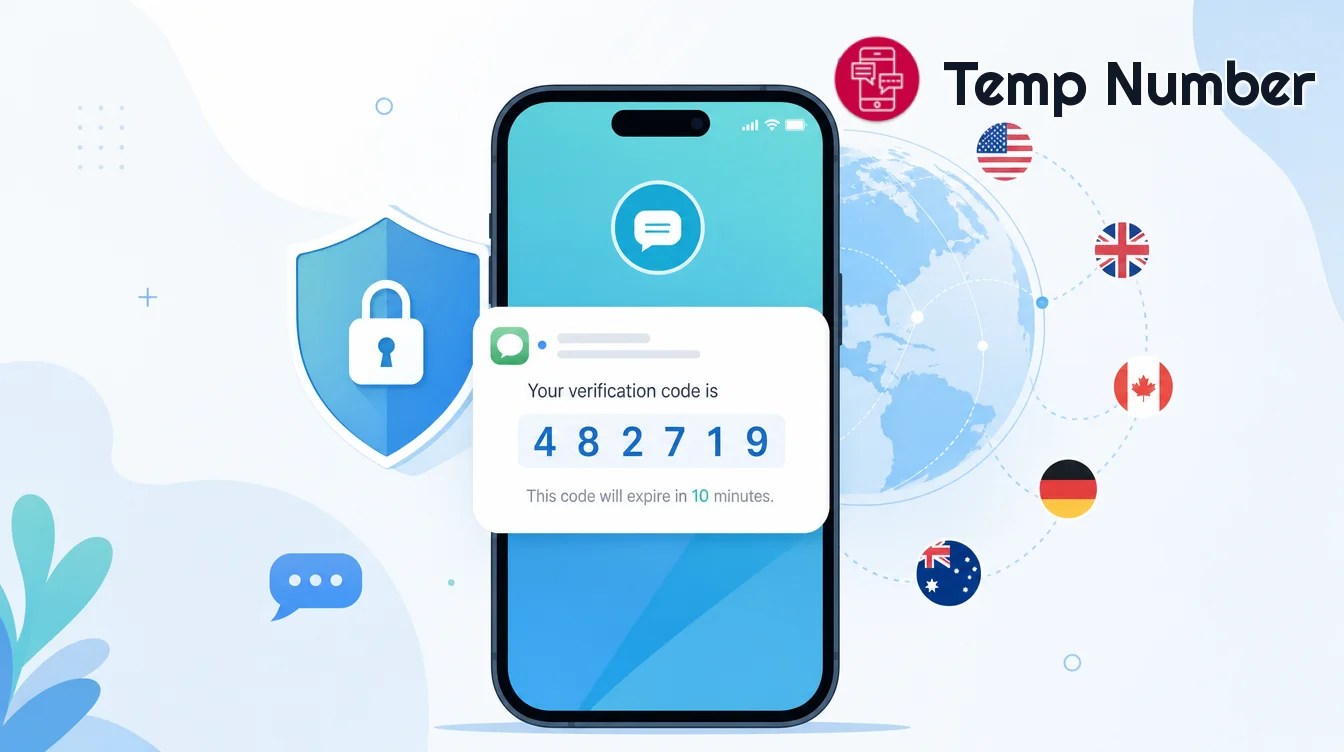
Virtual numbers work by routing SMS messages through the internet instead of a cellular tower. When an app sends a verification code to that number, it arrives in your online dashboard instead of a physical handset. You read the code, type it in, done.
The number isn't tied to your identity at all. No personal documents required. No monthly contract. For most casual signups, that's more than enough.
Quick fact: Services like temp-number.com offer free shared numbers for instant one-time verification - no account or credit card needed to get started.
Side-by-Side Comparison
| Feature | Real SIM Card | Virtual / Temp Number |
|---|---|---|
| Setup Time | Hours to days | Under 10 seconds ✓ |
| Privacy | Requires your ID | No personal documents needed ✓ |
| Cost | $5-$30/month | Free or cents ✓ |
| Works Without Internet | Yes | No (needs internet) |
| Blocked by Apps | Rarely | Sometimes (VoIP) |
| Best For | Daily personal use | One-time verifications ✓ |
| Number Count | Usually 1 | Numbers from 50+ countries ✓ |
| Physical SIM Needed | Yes | No ✓ |
When Should You Use a Real SIM Card?
Real SIM cards are non-negotiable in certain situations. Here's when you genuinely need one:
Your primary WhatsApp, iMessage, or phone account - things you use every day
Banking apps or financial services that do background carrier checks
Emergency calls - virtual numbers typically can't reach 911 or 999
When you need reliable voice calls, not just SMS
Long-term accounts where the number needs to stay the same for years
The bottom line: your personal SIM is irreplaceable for the accounts that matter most. Nobody is suggesting you ditch your SIM entirely - that would be impractical. The question is whether every single app signup deserves that number.
When Is a Virtual Number the Smarter Choice?
For a surprisingly large portion of daily online activity, a virtual number does the job just fine - and leaves your real number out of it. Consider these scenarios:
Signing Up for a New Service You're Not Sure About Yet
You found a new productivity tool online. It looks useful, but you've never heard of the company. You don't know their spam policy. Giving them a virtual number means if they sell your data, your personal number stays out of it.Separating Work and Personal Profiles
Many people keep a separate professional presence on platforms that support it - Instagram, for example, officially allows multiple profiles. A virtual number lets you attach a dedicated work number to that profile - no second SIM, no second phone.Testing Apps as a Developer or QA Tester
If you're building or testing an app with SMS verification, you need to run registrations repeatedly. Doing that with your personal SIM is messy. Virtual numbers let developers run automated registration tests cleanly and cheaply.Online Marketplaces and Classified Ads
Posting on Craigslist, Facebook Marketplace, or local classifieds means your number becomes visible to strangers. A disposable number protects you until you know the buyer is trustworthy.Trying a Service Without Joining Its Marketing List
Many services collect the phone number you sign up with for marketing follow-ups. A virtual number lets you evaluate a service without handing your personal number to yet another mailing list.
Privacy tip: temp-number.com provides numbers from 50+ countries. Travelers and expats can pick a number from home - useful for staying reachable on familiar regional services while abroad.
What About the Limitations of Virtual Numbers?
Virtual numbers aren't perfect, and it's worth being upfront about that.
Some platforms block them. Major services like WhatsApp, Uber, and certain banks use carrier lookup databases to detect VoIP numbers. If a service only delivers SMS to mobile carrier numbers, a shared VoIP number may not receive its messages. Premium private numbers - which are backed by real SIM infrastructure - offer far more dependable delivery.
Shared numbers have no privacy between users. Free public numbers on services like temp-number.com are shared - anyone visiting the site can see incoming SMS messages. This is fine for one-time verification codes, but you should never use a shared number for anything sensitive.
They're temporary by nature. Most virtual numbers aren't meant to be permanent. If you need a stable long-term number, a private paid number or a real SIM is the right tool.
How to Use a Temporary Number on temp-number.com
If you want to try a virtual number right now, it takes less than a minute:
Go to temp-number.com
Choose a country from the list (US, UK, India, Germany, and 50+ more)
Select any available number from that country
Use that number in the signup form of the app you're registering for
Watch for the verification SMS to appear on screen - usually within seconds
Enter the code and you're in
No account needed for the free shared numbers. If you need a number that's private (only you can see incoming messages), temp-number.com also offers private numbers through their coin system.
So Which One Do You Actually Need?
The honest answer is: probably both, for different purposes.
Think of your real SIM like your home address. You give it to people you trust - your bank, your family, the delivery service. You wouldn't print it on a flyer and post it on every street corner.
A virtual number is like a P.O. box. It receives the mail you asked for, keeps your home address private, and you can change it anytime without consequences.
The smarter approach isn't to replace your SIM. It's to stop using it as a default for every random signup that asks for it.
Bottom line: Use your real SIM for accounts that matter. Use a virtual number for everything else. Your inbox - and your privacy - will thank you.
Frequently Asked Questions
Is using a virtual phone number legal?
Yes, in most countries. Using virtual numbers for privacy during online signups is entirely legal. Where it can become an issue is if you use them to impersonate someone, bypass identity verification for regulated financial services, or violate a platform's Terms of Service (which may ban multiple accounts).
Can virtual numbers receive calls?
Some virtual number services support voice calls, but most temporary number services - including shared numbers on temp-number.com - are SMS-only. If you need to receive voice calls, you'd need a VoIP-capable service.
Do virtual numbers work with every app?
Not always. Some platforms only deliver verification SMS to carrier-backed mobile numbers, so a shared VoIP number may not receive their messages. Carrier-backed private numbers (available on paid tiers of temp-number.com) offer more reliable delivery. Whichever you use, make sure your account complies with the platform's terms of service.
How long does a temporary number stay active?
Shared public numbers on temp-number.com rotate periodically. If you need a number to stay active longer - for example, to receive account recovery codes later - a private number with an extended rental period is the right choice.
Final Thoughts
The gap between a real SIM card and a virtual phone number is simple: one is permanent and tied to your identity, the other is instant and keeps your personal details private. Neither is universally better - the right tool depends on what you're trying to do.
For anyone who signs up for new services regularly, keeps work and personal profiles separate, or just prefers not to have their personal number floating around the internet, a temporary virtual number is one of the easiest privacy upgrades you can make. It costs nothing to try, takes seconds to set up, and leaves your real number exactly where it belongs - with the people and services you actually trust.
Try a free temporary number at temp-number.com - no signup required.